Printed in clay, not plastic
Cerapira pieces are made by paste extrusion: real Dehua porcelain clay is pushed through a nozzle and laid down in a continuous coil, layer over layer, following a path generated from a 3D model. Nothing is cast, nothing is glued. What comes off the printer is already the finished form — it then goes through drying, hand trimming, firing and inspection exactly as any other piece of Dehua porcelain would.
Geometry a mould cannot release
Continuous spirals, undercuts, lattices and walls that vary in thickness from top to bottom. Slip casting needs a form that can leave the mould; printing does not.
Precision, repeated
The same file produces the same wall, the same rhythm of lines, the same light pattern — across the first piece and the five-hundredth.
No tooling, no minimum mould cost
A new shape costs a new file, not a new plaster mould. That is what makes short runs, seasonal variants and one-off commissions economically possible.
Still finished by hand
Trimming, firing and inspection remain human work. Clay shrinks, the kiln has its own opinion — no two pieces come out identical, and we do not pretend otherwise.
From file to fired piece
-
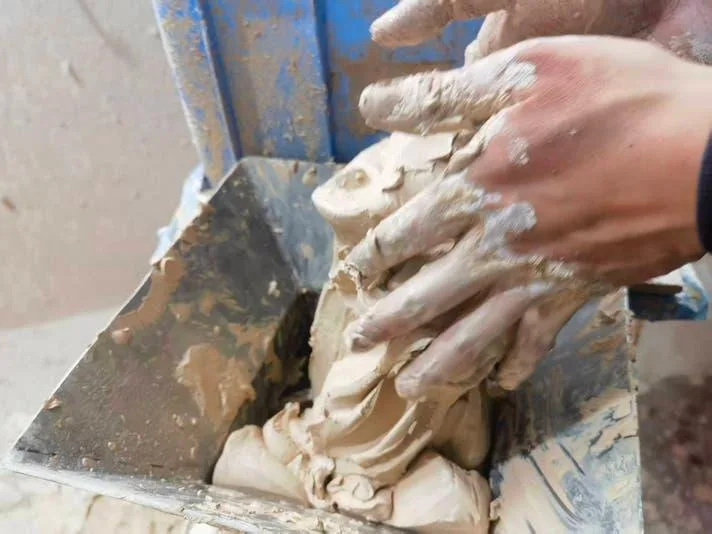 01
01 Clay preparation
Dehua porcelain clay is mixed to a printable paste and de-aired.
-
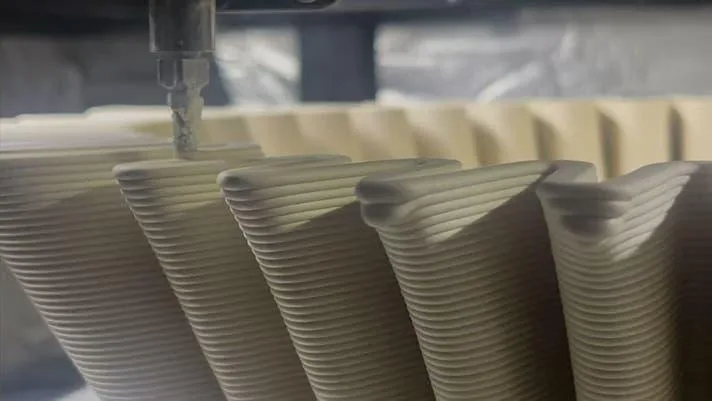 02
02 Layer-by-layer printing
The form is extruded as one continuous coil following the 3D path.
-
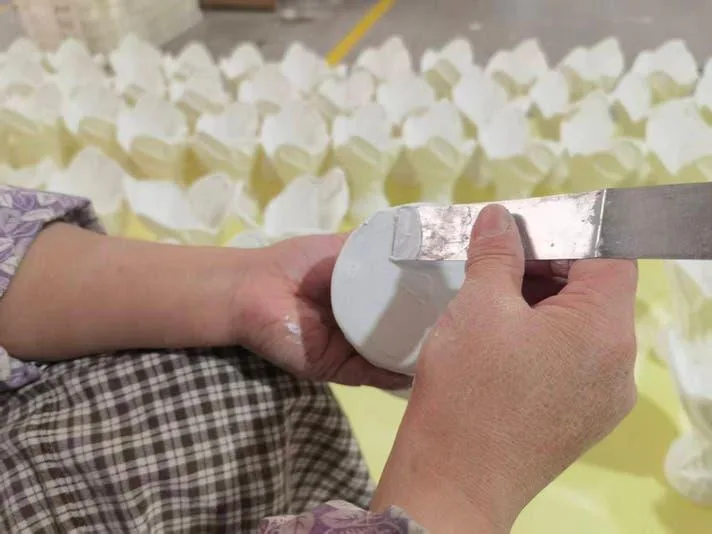 03
03 Drying & hand trimming
Slow drying, then edges and seams are trimmed by hand.
-
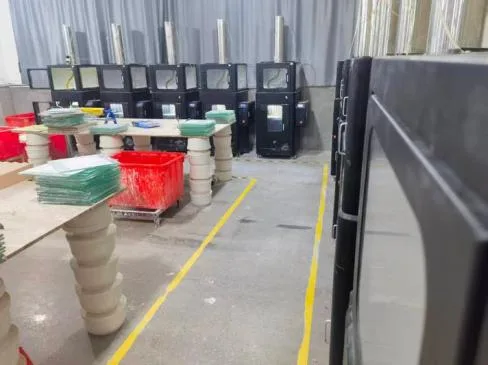 04
04 High-temperature firing
Fired in the Dehua kiln; the body shrinks and vitrifies to translucency.
-
 05
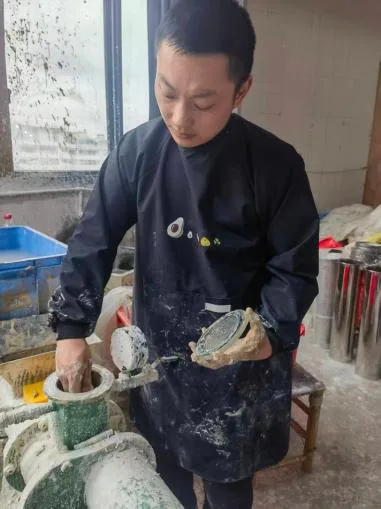
05 Finishing
Foot and rim are ground and finished by a craftsman.
-
 06
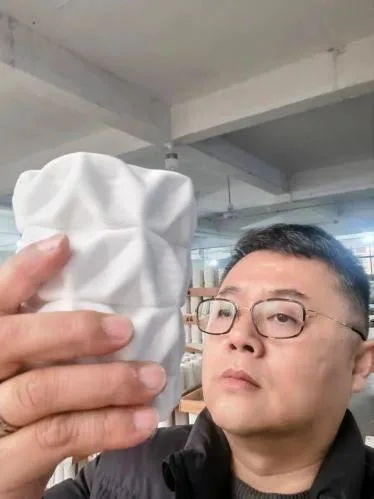
06 Inspection
Every piece is checked individually before it is packed.
Watch it being made
- Material
- Dehua porcelain clay
- Process
- Paste extrusion (LDM)
- Max size
- TBC — ⌀ / H
- Layer height
- TBC
- Finish
- Unglazed bisque / glazed
- Lighting
- USB LED module (optional)
Indicative figures — confirm with us for your specific geometry.